Published: July 2017
Although I’ve learnt a lot in the last three years, I have so much more to learn. Although not entirely a beginner any more, I would say my technical experience with photography is limited to a “need to know” basis. If I’ve struggled with it, I’ve researched it and found solutions to it. I can remember coming back from a shoot with my kids and I’d really struggled with the light. The images were contrasty and the colours were odd. I was so frustrated and I didn’t know what I’d done wrong. I deleted all the depressingly bad images, and spent several days researching the angle you should have the sun at, how to light outdoor portraits, about polarising filters, and heading out in the soft light at the beginning or the end of the day rather than while the sun is high in the sky.
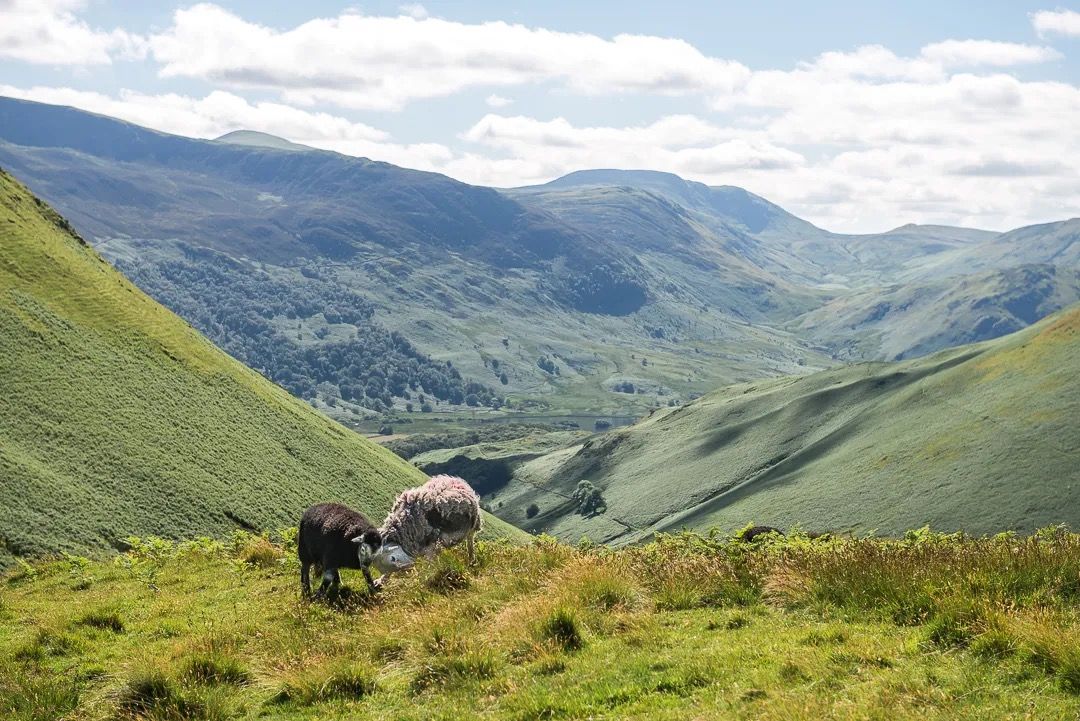
Sheep with a view
I learnt so much from making those mistakes that day, and I would now know what to do if I had to be out taking photos in the harsh light again. There are however large gaps in my technical knowledge. I know very little about techniques such as panning, free lensing, or long exposures. Mainly because I haven’t been inspired enough to want to learn it for myself. I can really appreciate the skill in these images, and I can see why panning* a Formula One car looks better than taking it with a really fast shutter speed, but I haven’t as yet wanted to take these pictures for myself.
*panning is tracking the motion of the object with your camera, and a relatively slow shutter speed. This gives an amazing sense of motion and speed with a blurred background, whereas the object is sharp and clear. Obviously with a fast shutter speed and the whole scene frozen, it gives no sense of the speed at which the car was travelling. Very tricky to do, I should imagine!
Some people love the technical shizzle. Some people however are entirely intuitive, and just because you are using a camera on auto mode, or just an iPhone doesn’t mean you aren’t a great photographer. A large proportion of being a good photographer is about spotting the shot, the composition, being in the right place a the right time. If you have spent three days on a mountain waiting for a snow leopard, then you click the shutter in automatic mode, are you any less of a photographer?
I think I fall somewhere between these two camps. I know my camera well, I shoot in manual mode, I understand f stops, shutter speeds and focus points, I like to try and get my images technically “correct” (ish 😉 ) When it comes to landscape photography though, I don’t own the attachments and filters needed to do long exposures, and I don’t entirely know how to do them. I am also aware that in many people’s eyes this makes my landscape shots “incorrect”. So I’m putting myself out here a bit by posting these on my blog.
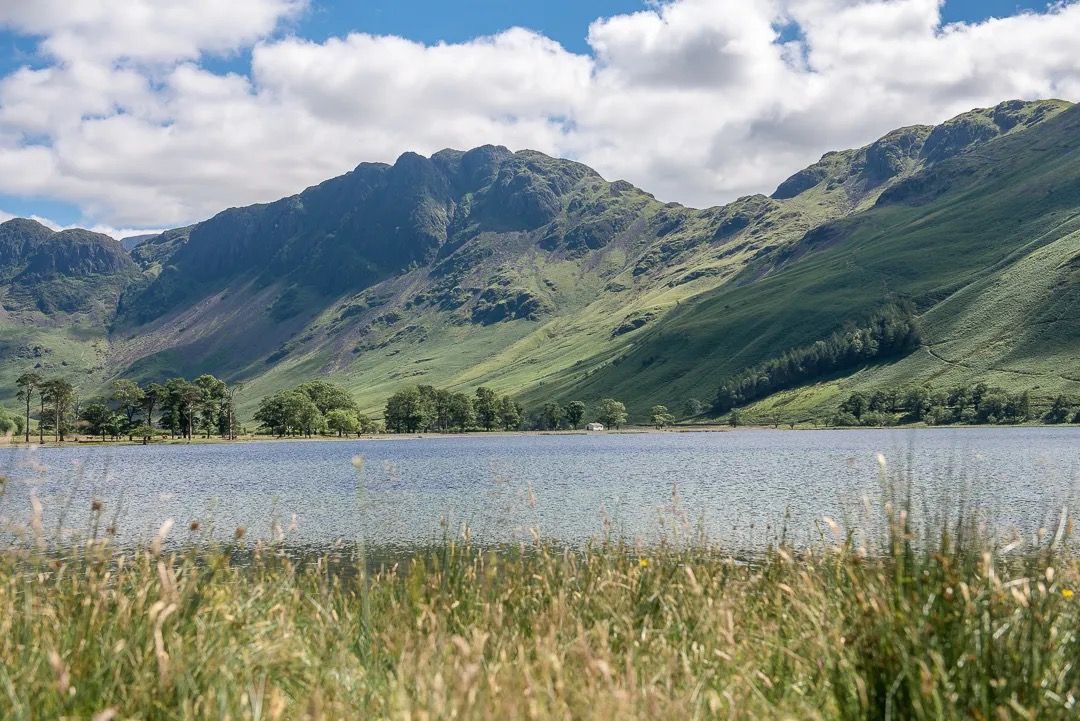
Buttermere – I focused on the white building on the far shore, so at f5.6 this left the foreground out of focus, but I like it as it draws the eye through the image to the mountain
Last weekend I was invited to The Lake District as part of a Nikon organised meet up. The Nikon School based in London have run several of these meet ups to different locations, people enter into a ballot in order to come along, and a lucky 30 are chosen! So I was very grateful to be invited along too, and very excited to see The Lake District again.
I was the only photographer there without a tripod, attachments and filters. To begin with I was a conscious of this, but then I figured we don’t have to pretend to be experts in every area of photography! Just because I’d never done it before, didn’t mean I couldn’t snap away too and learn a lot from the day.
So why use a tripod for landscape photography? This is the basic version – it’s about depth of field. When shooting landscapes you want as much of the picture as possible in focus, so you want to shoot at around f11-f14. You also want to keep your ISO as low as possible to keep the detail in the image. The higher the number on the f-stop, and narrower the aperture – therefore less light is getting into the camera. To balance the exposure with a narrow aperture, and a low ISO, will result in a slower shutter speed.
If this is gobbledygook, don’t worry. I will do a post soon on the photographic triangle and shooting in manual mode. Until then you can have a look at the basics here, I think this post explains it really well.
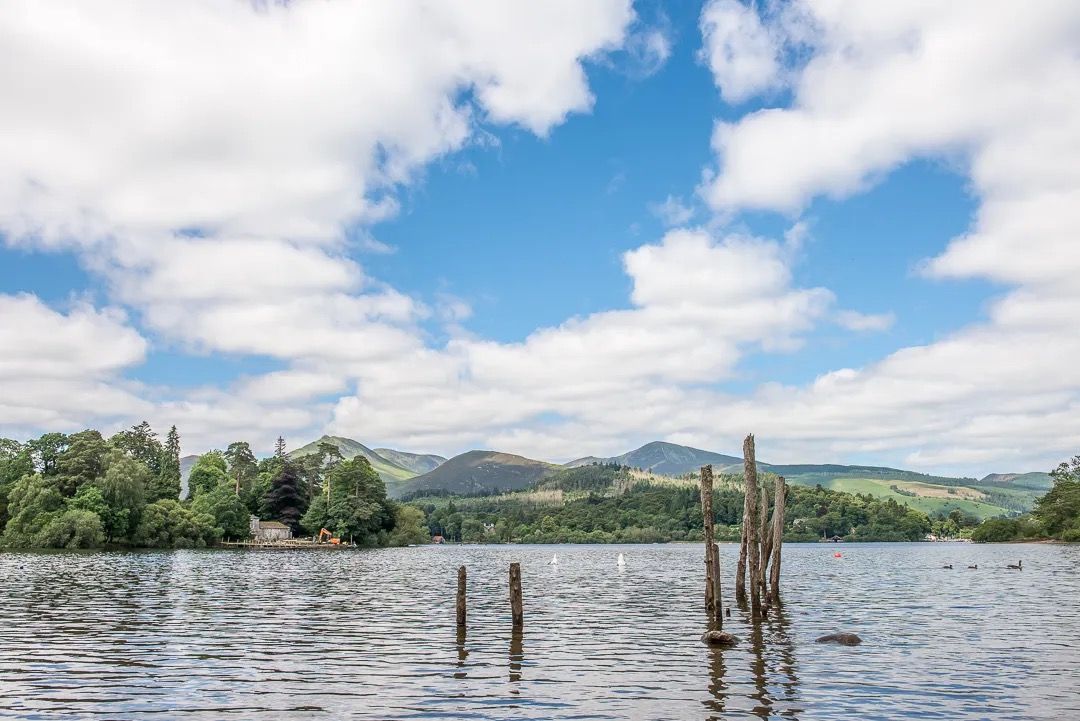
Derwent Water – extras points for spotting two swan bums 😉
Slow shutter speeds without a tripod can cause problems with camera shake, leading to a blurred shot. Of course there are good stances you can adopt to help this. Always look through your view finder, not the live view screen. This will help you to stabilise your camera against your face. Plant your feet well on the ground with one foot infant of the other! Sounds obvious, but it helps. Of course you can look for rocks or fences too to put your camera on, but this is restricting.
There is a basic calculation which I would always try to stick to when hand holding your camera. That is to keep your shutter speed around double the focal length you are using. For example, shooting at 2oomm? Then don’t let your shutter speed drop below 1/400. Shooting at 50mm? Then stick to 1/100.
I took all the images in this post at f5.6. I probably could have pushed that number a little higher, but with my 24-70mm lens I wanted to make sure the shots were sharp so I kept my shutter speed at around 1/200 – 1/500.
So once you have committed to carrying a tripod for your landscape photography, then you might as well have a bash at using some longer exposure times! Why are long exposures good for landscape photography? If you are shooting in low light, sunrise or sunset you will get more colour and drama in the sky. You can also create some lovely effects with smoothed out water, and soft blurry movement in the clouds. If you are leaving your aperture open you risk damaging the sensors on your camera, and this is why you will need to add filters… aaaand this is about the limit of my knowledge.
I did have one try at a long exposure, with the assistance, tripod and filters of one of the Nikon crew. It’s the image below and you can see the softness in the clouds and the smooth water, and also the depth of colour in the sky. What are your thoughts? Do you like it? I do – and it’s a better picture than the hand held ones I took at this scene. Their is more depth in the colours and clarity in the distance. However in my opinion long exposures are not without their problems, blurry ducks and boats being two of them! I photoshopped out a few blurry boats in the foreground of this image. Maybe it’s not the best technique for every landscape scenario?
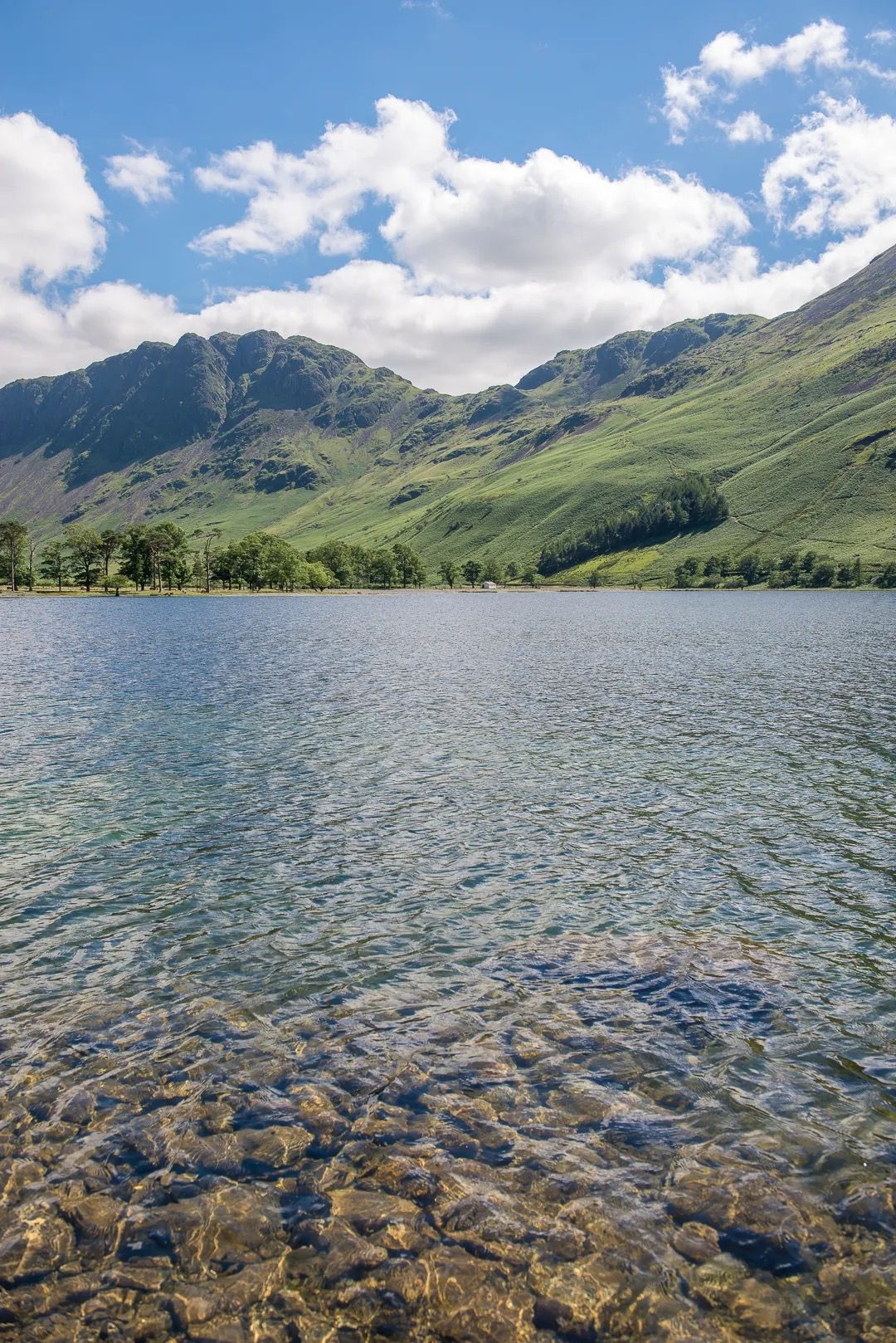
Buttermere – this view again 🙂 I love the foreground details, makes me want to wade in
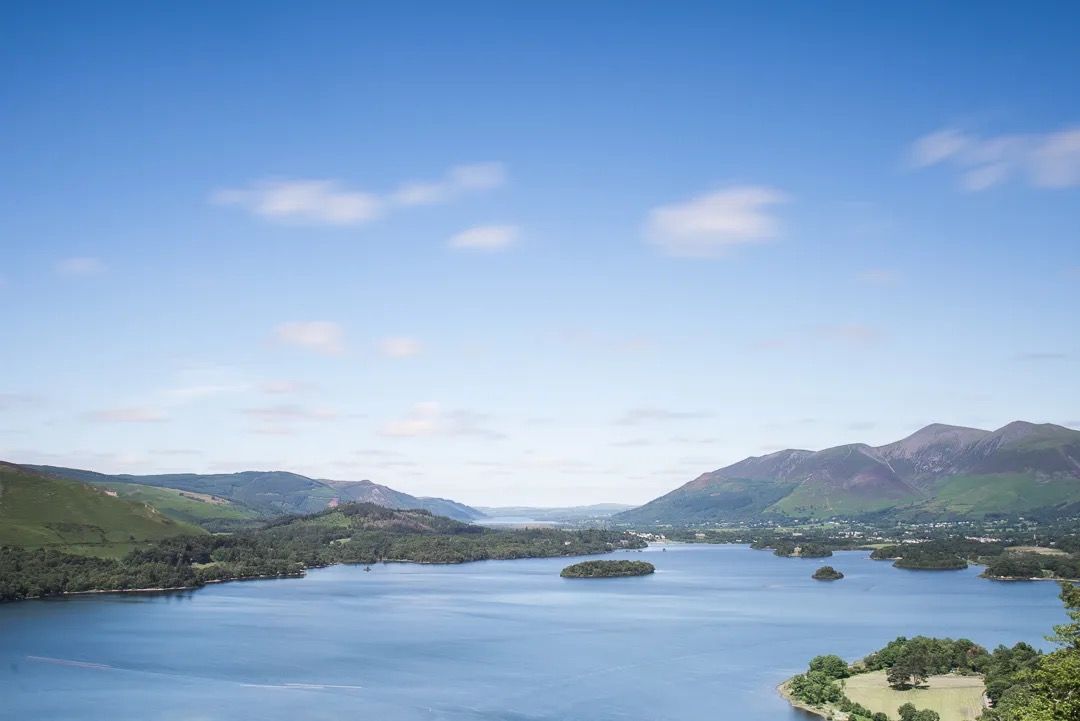
Surprise View – f14 | 30sec | ISO 100
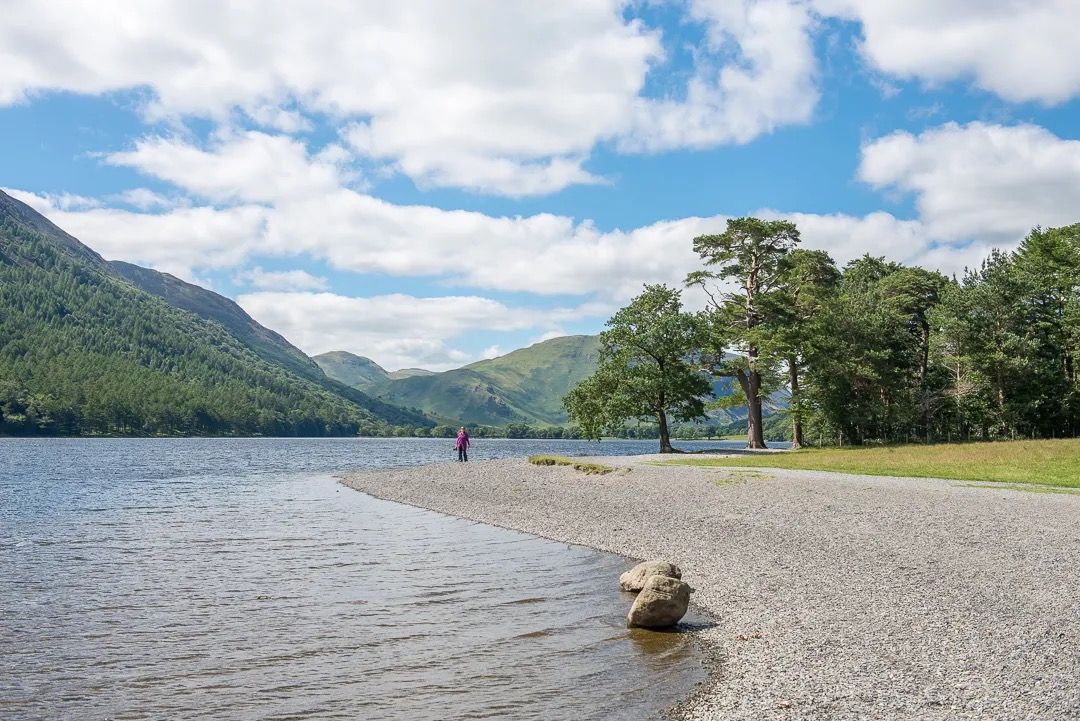
Buttermere
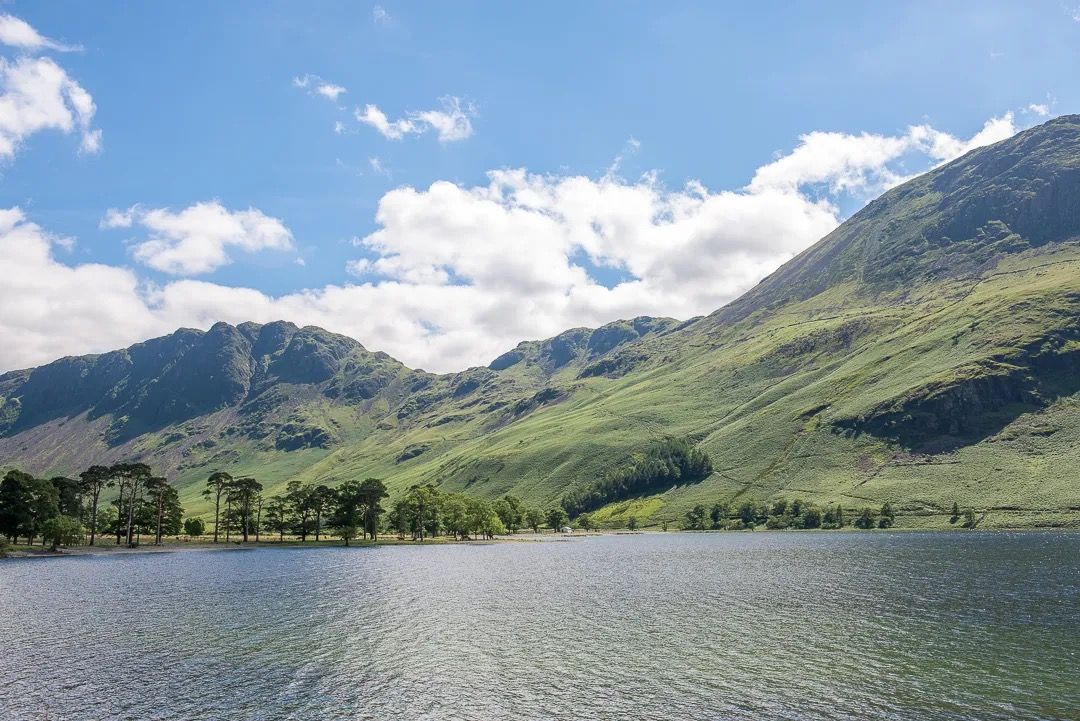
Buttermere – obsessed with that tiny white building on the shore
So why am I writing this post if my shots aren’t “correct” and I don’t know much about landscape photography? Because I like them! And to encourage you too to go out and takes the pictures, even if you feel you don’t have enough kit or knowledge to do it “properly”. I learnt a lot that day, and I had a brilliant time, in a beautiful place, with really nice people. None of whom seemed to think any the less of me for being the only one without a tripod!
And I quite like round clouds anyway 😉.
This post is not sponsored, just something I fancied writing! Thank you so much to Nikon School for inviting me along, and if you would like some tuition I can recommend them, they really know their shizzle 😉


